The Gardens at Historic Hope
Flower Garden
The flower garden at the King-Bazemore House contains both annual and perennial flowers. Early spring flowers such as crocus are followed throughout the growing season by peonies, iris, dianthus, marigolds, love-lies-bleeding, zinnias, and many others. Nineteenth-century roses are planted along one edge of the garden.
Vegetable Garden
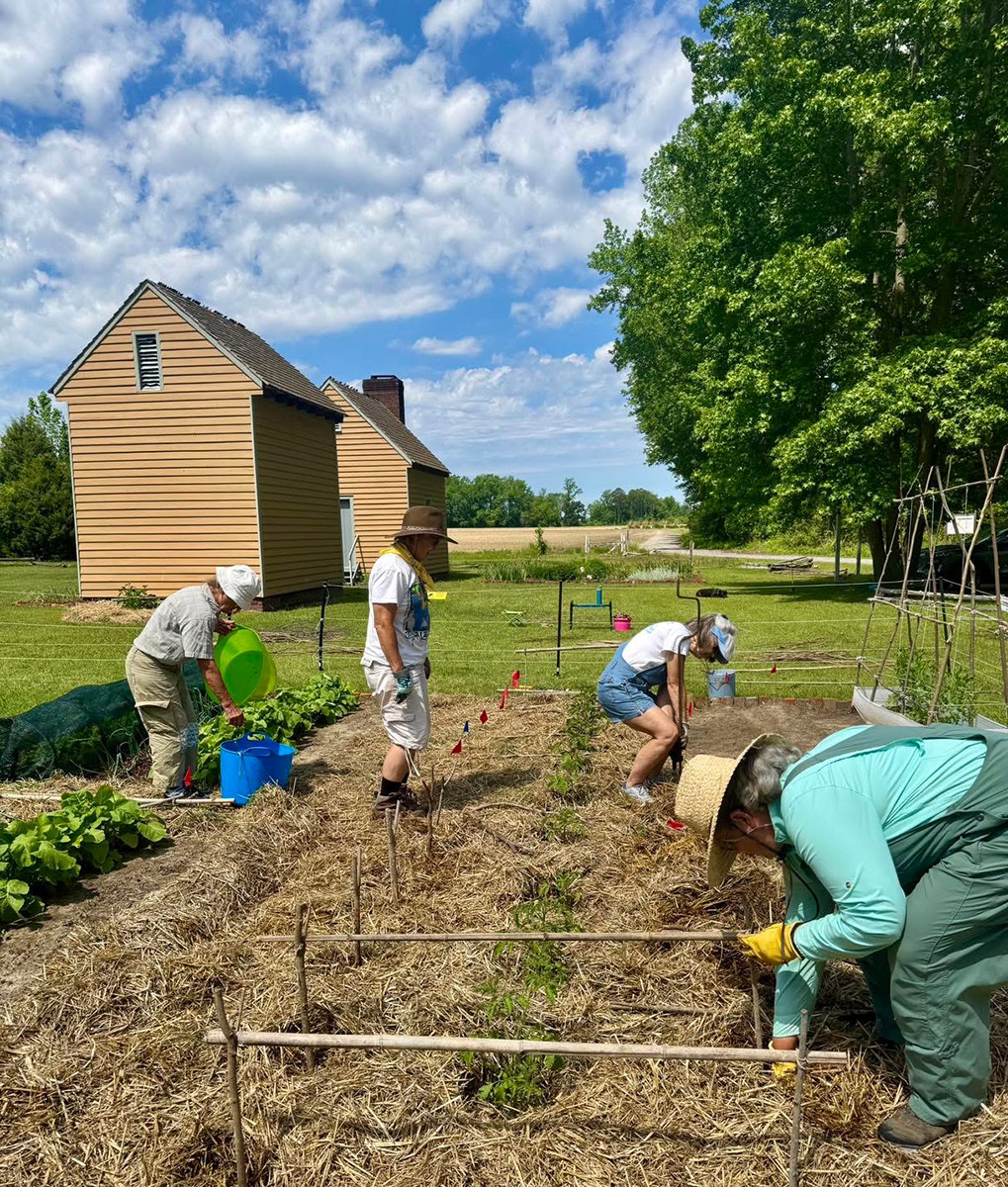
Located behind the King-Bazemore House, the vegetable garden contains both early- and late-season varieties. Cultivation methods used in this garden approximate those practiced during the colonial period. The garden includes vegetables that would have been cultivated by Native Americans, European settlers, and enslaved people.
Plantings vary from year to year but often include potatoes, peas, turnips, kale, okra, beets, squash, and several varieties of heirloom tomatoes and peppers. An asparagus bed lies adjacent to the vegetable garden, while beds located in front of the nearby smokehouse are planted with walking onions and garlic.
Herb Garden
Located near Hope Mansion, the herb garden contains plants historically grown for culinary, medicinal, and practical purposes. During the eighteenth and nineteenth centuries, herbs were used primarily for medicinal and functional purposes, although they were also used in cooking and food preservation.
Medicinal plants in Historic Hope’s herb garden include wormwood, comfrey, lamb’s ear, and yarrow, while fennel, Italian parsley, and rosemary were commonly used in cooking. Other herbs, including garlic chives, oregano, sage, sweet mint, tansy, and thyme, were used in cooking, medicine, and household life, including as insect repellents.
Fiber & Dye Garden
Located near Hope Mansion, the fiber and dye garden features plants historically used in the production of textiles. Fields of flax and cotton were grown on many plantations and processed into linen and cotton yarn, which could then be woven into clothing and other items.
Beds of cotton and flax are planted along the garden fence, along with several yucca plants. Fibers from yucca leaves were used to make sandals, mats, and clothing, while the edible flowers were used in making medicine and soap.
Dye plants throughout the fiber and dye garden include blue false indigo and daylily, along with pear and peach trees and other plants historically used in natural dyeing.